
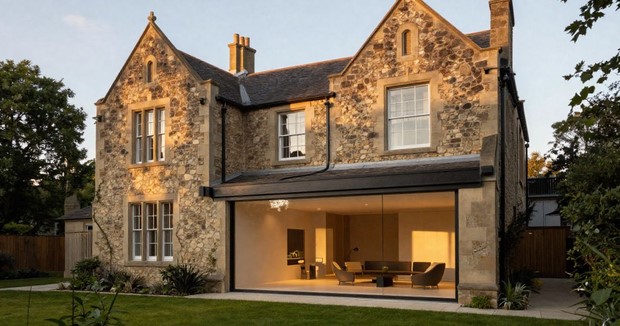
A successful heritage building conversion preserves original character while adapting the interior for contemporary life.
A heritage building conversion is one of the most rewarding – and most demanding – projects a homeowner can undertake. Done well, it marries the irreplaceable craftsmanship of a period property with the light, comfort and efficiency we expect from a modern home. Done poorly, it erodes the very character that made the building worth saving. At Powell Tuck Associates, we approach every project with a deep respect for the heritage of a space and a drive to carry timeless design into the future.
This guide walks you through the practical strategies, legal considerations and design principles behind a sympathetic heritage conversion – from understanding your building’s special interest to extending it without compromising its soul.
What Is a Heritage Building Conversion?
A heritage building conversion is the process of adapting a historic structure – a Georgian townhouse, a Victorian terrace, a former chapel, school or warehouse – for new or improved use, while safeguarding the architectural and historic features that make it significant. Unlike a standard renovation, it requires you to balance two competing priorities: meeting modern standards of comfort, space and energy performance, and preserving period fabric such as cornicing, sash windows, fireplaces, joinery and original masonry.
The discipline overlaps closely with listed building renovation and conservation area architecture, and the right approach depends heavily on whether your property is listed, sits within a conservation area, or both.
Why Heritage Conversions Are Worth the Effort
- Character that cannot be replicated – original proportions, materials and detailing add lasting value and appeal.
- Sustainability – retaining and reusing an existing structure is far less carbon-intensive than demolition and rebuild.
- Planning advantages – sensitive reuse of a heritage asset is often viewed favourably by local authorities.
- Long-term value – well-converted period homes are consistently sought after in the UK market.
Do I Need Permission to Convert a Heritage Building?
In most cases, yes. The level of permission depends on the building’s designation. If your property is listed, you will almost certainly need Listed Building Consent (LBC) for any work – internal or external – that affects its character as a building of special architectural or historic interest. According to Historic England, carrying out unauthorised works to a listed building is a criminal offence, and a planning authority can require that unauthorised work be reversed.
Crucially, Listed Building Consent is separate from planning permission. You may need one, the other, or both. Even internal alterations – removing a wall, altering a staircase or replacing a floor – can require consent. Always begin with a conversation with your local authority’s conservation officer, and consider seeking pre-application advice via the Planning Portal before committing to a design.
A Practical Permissions Checklist
- Check the building’s status on the National Heritage List for England and confirm its grade (II, II* or I).
- Establish whether it sits within a conservation area, which adds its own controls.
- Commission a Heritage Statement that identifies the building’s significance and special interest.
- Hold a pre-application discussion with the conservation officer before finalising designs.
- Submit Listed Building Consent and/or planning applications together where both are required.
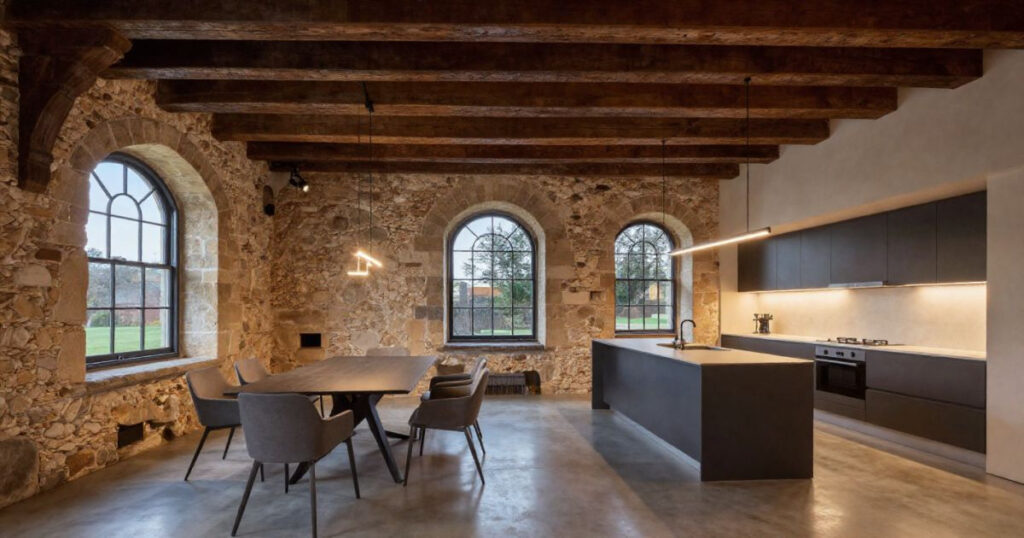
Modern interventions can sit comfortably within a historic shell when original features are retained and celebrated.
Can You Extend a Listed Building?
Yes – listed buildings can be extended, but the bar is higher than for an ordinary period property extension. Planners assess whether the proposal preserves or enhances the setting and character of the building, not simply whether it meets standard size rules. Historic England guidance generally advises that extensions should be lower and smaller than the original building, positioned to the rear where possible, and designed so they do not dominate or obscure the host building.
There are broadly two successful design philosophies, and both can win consent when handled with care.
Approach 1: Matching and Blending
Here the extension echoes the original – using reclaimed or matching brick, lime mortar, complementary window proportions and traditional detailing so the addition reads as a natural evolution of the building. This works well on prominent elevations and in sensitive streetscapes.
Approach 2: Honest Contrast
Increasingly encouraged by conservation officers, this approach makes the new work clearly identifiable as a 21st-century addition – typically using glass, steel or clean minimalist forms. By avoiding pastiche, a contemporary extension creates a respectful dialogue between old and new and keeps the original fabric legible.
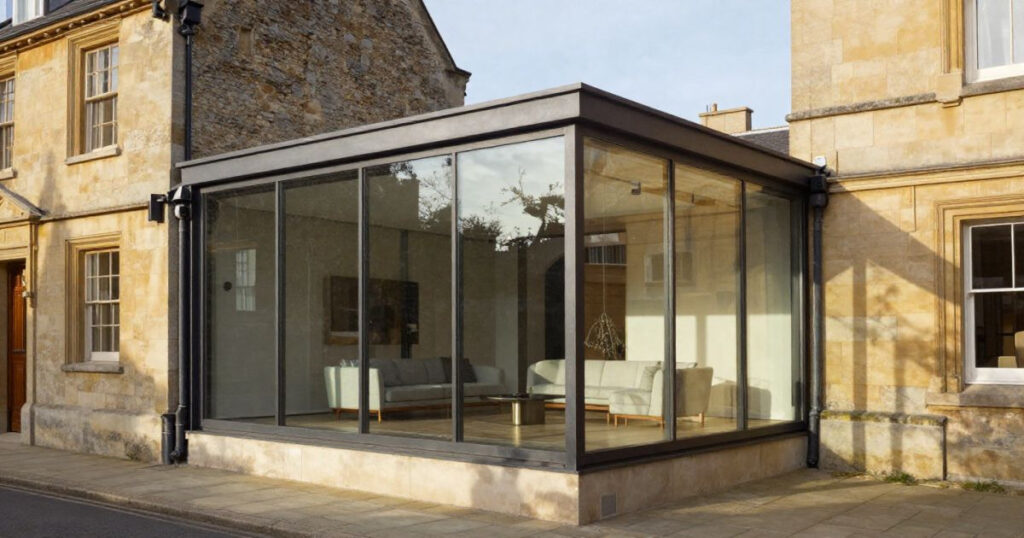
A lightweight glazed extension creates a clear distinction between historic fabric and modern addition.
How Do You Modernise a Period Property?
Modernising a period property is about inserting comfort without erasing character. The most successful listed building renovation projects treat services and performance upgrades as careful interventions rather than wholesale replacements. Below are strategies we apply on our own conversions.
Improve Energy Performance Sensitively
- Use secondary glazing or slim-profile units rather than ripping out original sash windows.
- Apply breathable, vapour-open insulation suited to solid walls to avoid trapping moisture.
- Upgrade loft and underfloor insulation where it can be hidden and reversed.
Bring In Light and Space
- Open up rear rooms to the garden with carefully framed glazing rather than removing key historic walls.
- Introduce rooflights to flood landings and circulation spaces with daylight.
- Reconfigure later, lower-value additions rather than altering principal period rooms.
Integrate Modern Services Discreetly
- Route heating, wiring and smart-home systems through existing voids and chases to minimise disruption to historic fabric.
- Choose underfloor heating in new areas and slim radiators that respect original mouldings elsewhere.
- Specify reversible interventions wherever possible, so future owners can adapt without loss.
You can see how these principles translate into built work across our portfolio of projects, including award-worthy conversions and extensions of London homes.
What Is a Conservation Area Restriction?
A conservation area is a place of special architectural or historic interest whose character it is desirable to preserve or enhance. Conservation area restrictions are additional planning controls that apply across the whole area – not just to listed buildings. In practice, conservation area architecture must respond to the local context, and certain works that would normally fall under permitted development may require planning permission instead.
Typical conservation area restrictions include:
- Tighter controls on demolition, including boundary walls and outbuildings.
- Restrictions on altering windows, doors, roofing materials and external finishes.
- Protection of trees, which generally require notice before works.
- Article 4 Directions, which can remove permitted development rights entirely in some areas.
For an authoritative overview of the permissions that may apply to older homes, Historic England’s guidance on making changes is an excellent starting point.
Working With a Heritage Architect
Achieving a good design with modest impact on a heritage asset is genuinely challenging, and it rewards the skills of an experienced conservation architect. A specialist will read the building’s significance, navigate the consent process, and resolve the tension between protection and modern living – often unlocking solutions a generalist would miss.
One of our North London clients summarised the value of this approach after we converted and extended their family home: the project, they told us, completely changed their experience of the house for the better, giving them both more light and more space – without sacrificing the character they loved.
If you are considering a heritage building conversion, our team would be glad to discuss your project. Get in touch with Powell Tuck Associates to start the conversation.
Frequently Asked Questions
Can you extend a listed building?
Yes. Listed buildings can be extended with Listed Building Consent, provided the extension preserves or enhances the building’s special character. Extensions are usually expected to be modest in scale, positioned to the rear, and designed in materials that either match the original or clearly read as a contemporary addition.
Do I need permission to convert a heritage building?
Almost always. Listed buildings require Listed Building Consent for works affecting their character, and a change of use or structural alteration may also need planning permission. Buildings in conservation areas face additional controls. Speak to your local conservation officer before you design.
How do you modernise a period property?
Modernise sensitively: upgrade insulation and glazing using breathable, reversible methods; introduce light through rear glazing and rooflights; and integrate heating, wiring and smart systems through existing voids. Retain principal period rooms and concentrate bolder changes on later, lower-value additions.
What is a conservation area restriction?
It is an additional layer of planning control applied across a designated area of special interest. Restrictions commonly limit demolition, alterations to windows and external finishes, and tree works, and an Article 4 Direction can remove permitted development rights – meaning more works need formal permission.
Conclusion: Honouring the Past, Designing for the Future
A heritage building conversion is a careful act of stewardship. The goal is never to freeze a building in time, nor to strip away what makes it special – it is to let a historic home breathe and function for the way we live now. With the right permissions, a clear understanding of the building’s significance, and a design that balances period property extension, listed building renovation and thoughtful conservation area architecture, you can create a home that feels both timeless and entirely contemporary.
At Powell Tuck Associates, we design with craft, care and purpose – turning historic buildings into spaces people genuinely want to inhabit. To explore how a sympathetic conversion could transform your property, contact our London studio today.