
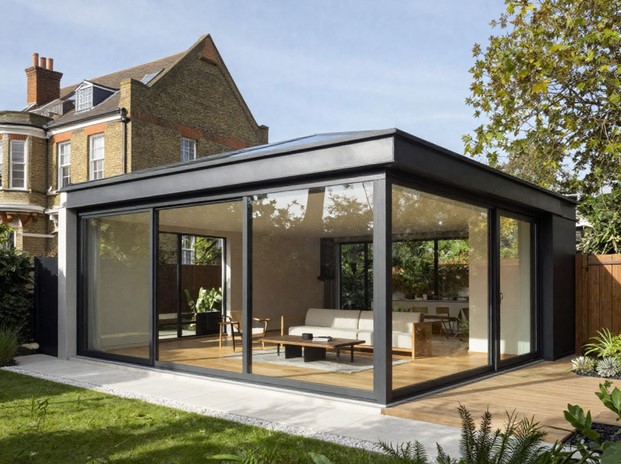
A bespoke home extension in London designed to flood living spaces with natural light.
A bespoke home extension in London is one of the most effective ways to transform how your home works without the upheaval of moving. With property prices at a premium and family needs constantly evolving, a thoughtfully designed extension can unlock generous living space, draw in natural light and reconnect your interiors with the garden beyond. At Powell Tuck Associates, we approach every project with craft, care and purpose – creating spaces that are as functional as they are beautiful, and as welcoming as they are enduring.
This guide explains how intelligent design maximises light and space, what you need to know about house extension planning permission, and how to navigate the journey from first sketch to finished home. Whether you are considering a single-storey rear extension or a full-scale remodel, the principles below will help you plan with confidence.
Why Choose a Bespoke Home Extension in London?
London homes are wonderfully varied – Victorian terraces, Edwardian semis, period mansion flats and post-war townhouses each carry their own character and constraints. An off-the-shelf solution rarely does them justice. A bespoke home extension in London is designed around your specific plot, lifestyle and the existing architecture, ensuring the new space feels like a natural extension of the home rather than a bolt-on afterthought.
Beyond the obvious gain in square footage, a well-considered extension can improve circulation, introduce better sightlines, raise energy efficiency and significantly increase the value of your property. One of our North London clients summarised it perfectly after the conversion and extension of their family home: the project completely changed their experience of the house for the better, giving them both more light and space.
Tailoring the Design to Your Home
Effective design begins with listening. How do you use your kitchen? Where does the morning sun fall? Which rooms feel dark or disconnected? By understanding these everyday patterns, we shape an extension that solves real problems. Explore our portfolio of London projects to see how tailored design responds to each unique site – from Camden House to Highlever House.
Rear Extension Design: Practical Strategies That Work
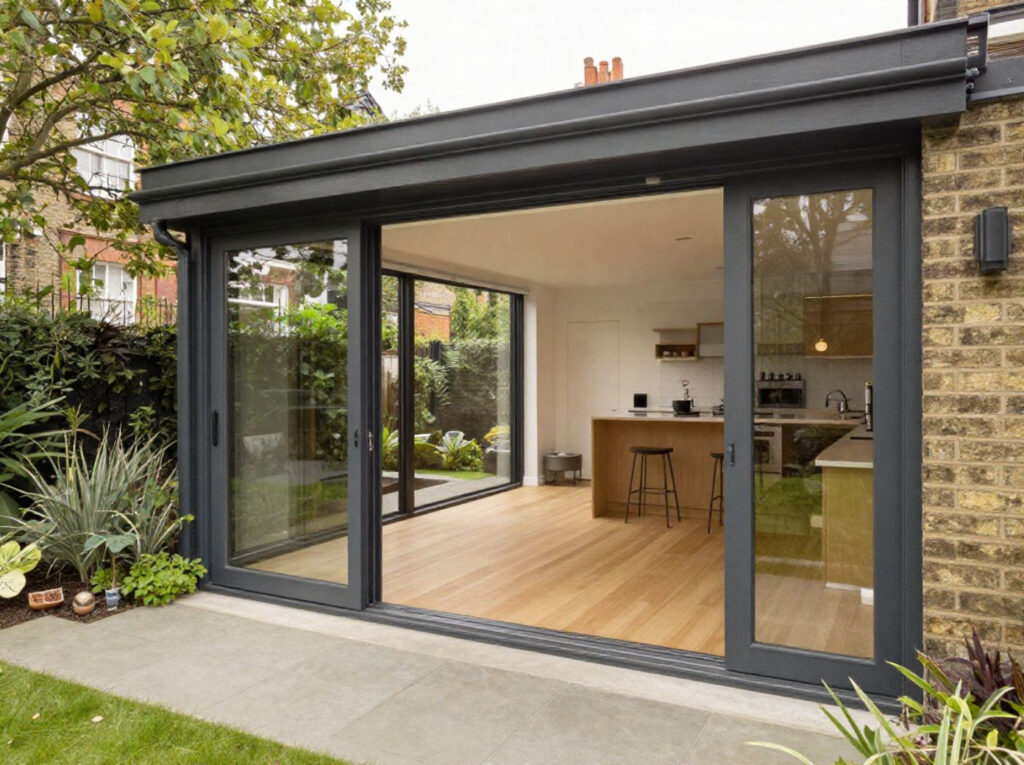
Considered rear extension design connects the kitchen and living areas to the garden.
The single-storey rear extension design remains the most popular choice for London homeowners, and for good reason. Extending into the rear garden creates an open-plan kitchen-dining-living hub that becomes the heart of family life. The key is to balance generous floor area with a garden you can still enjoy.
Strategies for a Successful Rear Extension
- Prioritise proportion: Resist the urge to extend to the maximum permitted depth if it leaves a cramped garden. Light and outlook matter more than raw metres.
- Step or wrap the plan: An L-shaped or side-return infill extension on a Victorian terrace can reclaim awkward dead space and dramatically widen the rear of the house.
- Vary ceiling heights: Raising the ceiling over the dining zone or adding a vaulted roof gives a sense of volume that flat ceilings cannot.
- Detail the threshold: Flush thresholds and aligned floor finishes between inside and out make the extension feel twice as large.
For example, on a typical side-return project we often combine a flat roof with frameless rooflights and a run of sliding doors – a deceptively simple move that turns a dim galley kitchen into a bright, sociable family room.
Maximising Natural Light in Your Extension
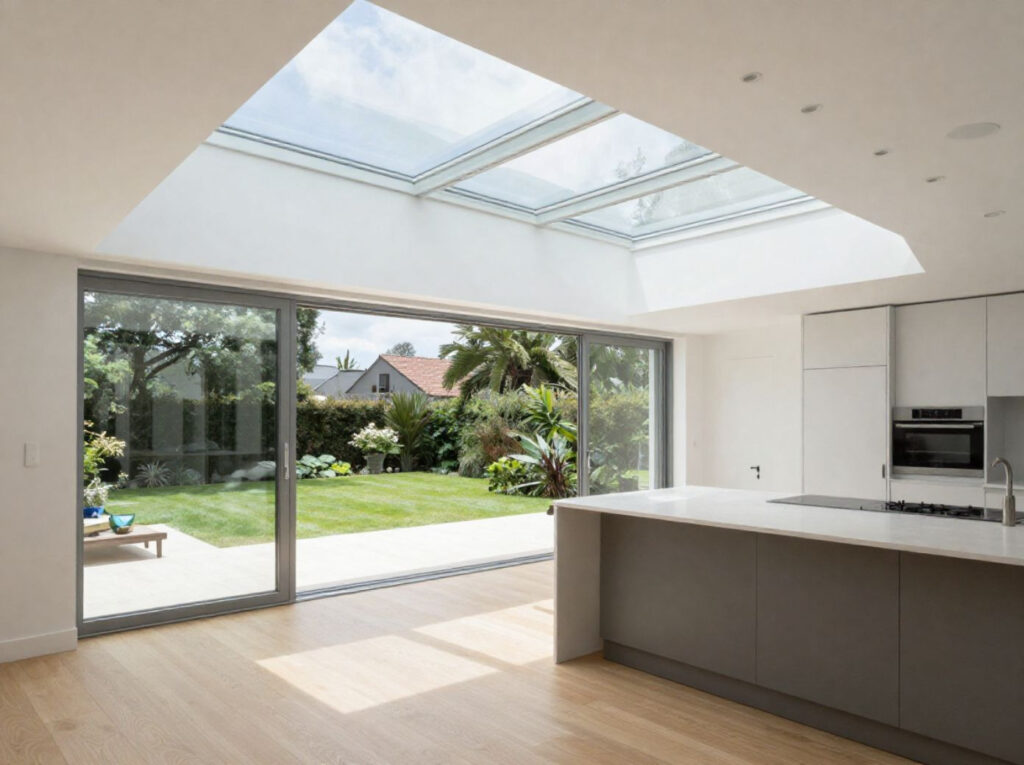
Rooflights, glazed doors and pale finishes work together to maximise natural light.
Light is the single most transformative element in any extension. Get it right and even a modest footprint feels expansive, calm and uplifting. The question we hear most often is simple: how do
I add more natural light to my home? The answer lies in combining several strategies rather than relying on one large window.
How Do I Add More Natural Light to My Home?
- Rooflights and lanterns: Overhead glazing delivers up to three times more daylight than a vertical window of the same size, and it draws light deep into the plan.
- Full-height glazed doors: Sliding or pivot doors blur the boundary between inside and garden while flooding the room with light.
- Light wells and internal courtyards: On deeper plans, a small courtyard or light well brings daylight to rooms that would otherwise be landlocked.
- Reflective, pale finishes: Light floors, matt white ceilings and carefully placed mirrors bounce daylight further into the space.
- Orientation-led design: Positioning glazing to capture south and west light – with shading to control summer glare – keeps interiors comfortable year round.
Indoor-Outdoor Living Design for London Homes
Great indoor outdoor living design is about more than a set of glazed doors. It is the deliberate choreography of levels, materials, views and transitions so that the garden feels like another room. Continuing a stone or timber floor from the kitchen out onto a terrace, aligning internal and external walls, and framing a key view all reinforce the sense of flow.
In London’s climate, practical detailing matters: covered thresholds, generous overhangs and underfloor heating keep these spaces usable well beyond summer. The result is a home that breathes – open and connected in fine weather, snug and sheltered when the seasons turn.
House Extension Planning Permission: What You Need to Know
Understanding house extension planning permission early in the process saves time, money and frustration. In England, many extensions can be built under permitted development rights, while larger or more prominent projects require a full planning application. The rules are nuanced, especially in conservation areas and for listed buildings, which are common across the capital.
What Is Permitted Development?
Permitted development is a set of nationally defined rights that allow certain building works without a full planning application, subject to limits on size, height and position. For a single-storey rear extension, these limits typically restrict how far you can project from the original rear wall and how tall the structure can be. You can check the official rules via the government’s Planning Portal and your local authority’s guidance.
Do I Need Planning Permission for a House Extension?
Not always – but often it is worth applying anyway for certainty. You are more likely to need full planning permission if your home is in a conservation area, is listed, sits in a flat or maisonette, or if the extension exceeds permitted development limits. Even where permitted development applies, we strongly recommend securing a Lawful Development Certificate to confirm the work is lawful – invaluable when you come to sell. Engaging an experienced architect early ensures your design is both ambitious and approvable. Get in touch with our team to discuss your project.
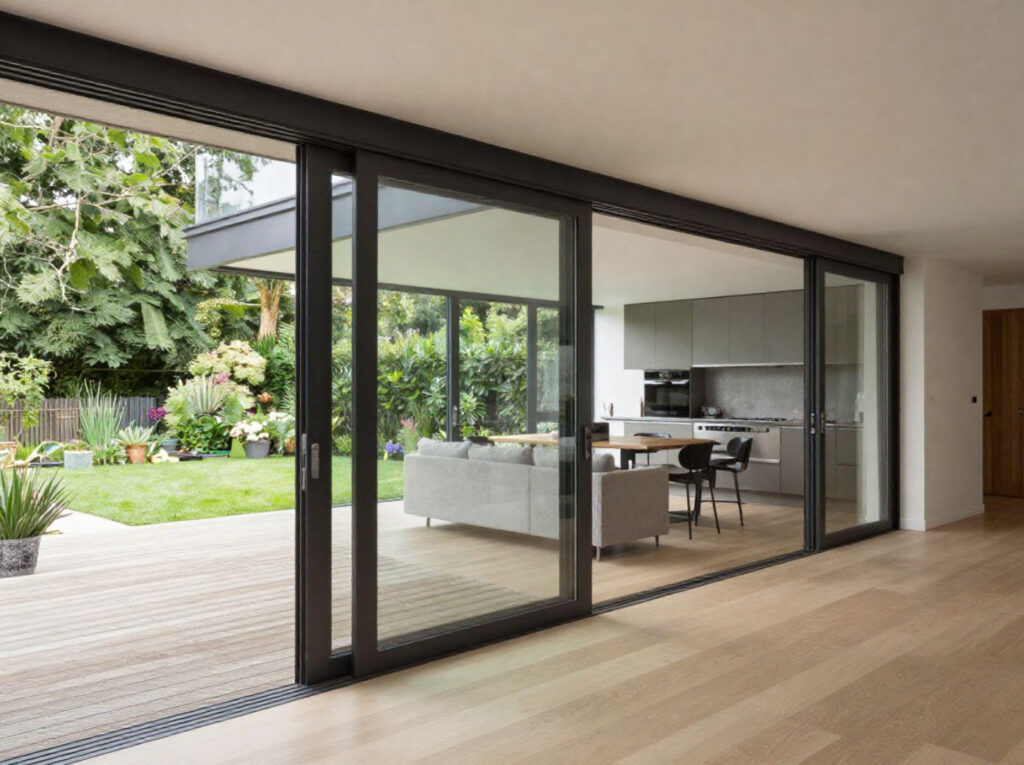
Seamless indoor-outdoor living design extends the home into the garden.
How Much Does a House Extension Cost in London?
Cost is naturally a central concern, and London commands a premium over the rest of the UK. As a broad guide, a good-quality single-storey extension in London typically ranges from around £2,500 to £4,000+ per square metre, with high-specification or structurally complex projects exceeding this. Several factors influence the final figure:
- Size and structural complexity of the build
- Specification of glazing, finishes and joinery
- Groundworks, drainage and site access constraints
- Professional fees, planning and building control
Beyond construction costs, budget for design fees, party wall agreements and a contingency of around 10–15%. A clear brief and accurate early-stage costing prevent unwelcome surprises later – something we build into every commission from the outset.
Frequently Asked Questions
Do I need planning permission for a house extension?
Sometimes. Many extensions fall under permitted development and do not require a full application, but homes in conservation areas, listed buildings and flats usually do. We recommend confirming your status early and, where eligible, obtaining a Lawful Development Certificate.
How much does a house extension cost in London?
Costs commonly start from around £2,500 per square metre for quality work and rise with specification and complexity. Add design fees and a sensible contingency to your overall budget.
What is permitted development?
Permitted development rights allow certain building works without full planning permission, within defined limits on size, height and position. These limits are tighter in conservation areas and do not apply to flats.
How do I add more natural light to my home?
Combine rooflights, full-height glazed doors, pale reflective finishes and orientation-led design. Overhead glazing in particular delivers far more daylight than vertical windows alone.
Conclusion: Designing a Home That Works Beautifully
A bespoke home extension in London is an opportunity to reimagine how you live – to bring in light, open up to the garden and create spaces that genuinely improve daily life. Success lies in marrying inspired design with a clear-eyed understanding of planning, budget and construction. With the right architectural partner, the journey from idea to finished home can be both seamless and deeply rewarding.
At Powell Tuck Associates, we deliver truly bespoke, high-quality solutions to complex problems, treating every home with the craft and care it deserves. If you are ready to explore what is possible for your property, contact our London studio or browse our featured projects for inspiration.